2 hours ago
Tryst Hospitality Acquires Provincetown’s Iconic Crown & Anchor, Pledges to Preserve Queer Landmark
READ TIME: 7 MIN.
When Tryst Hospitality announced its acquisition of Provincetown’s Crown & Anchor, one of New England’s best-known queer entertainment hubs, it signaled both continuity and change for a venue long regarded as a cultural cornerstone of the town’s LGBTQ+ community.
The deal places the Commercial Street complex—home to multiple bars, performance spaces, and a small hotel—into the portfolio of entrepreneur Tristan Schukraft’s LGBTQ+-centered hospitality group, which already operates properties in other major queer destinations.
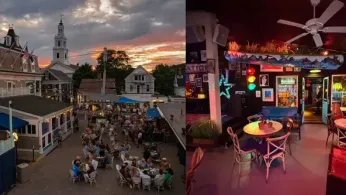
The Crown & Anchor has been described for decades as a central gathering place for queer visitors and residents in Provincetown’s historic center. The property currently includes six bars, a restaurant, a 17‑room hotel, and multiple nightlife and performance venues, including The Paramount, The Crown Cabaret, and The Vault, all of which have built reputations as spaces for drag, cabaret, live music, and community events.
According to historical information shared on the official Crown & Anchor website , the building originated in the mid‑19th century as the Central House, a public hall and hotel that hosted shows, a bowling alley, and a saloon, evolving over time into what is now considered Provincetown’s largest entertainment complex. The site notes that the venue has repeatedly adapted to new eras—surviving a major fire in 1998, being rebuilt in 1999, and later passing to owners who emphasized queer arts and LGBTQ+ hospitality.
In 2021, local owners Jonathan Hawkins and Paolo Martini took over stewardship of the Crown & Anchor, stating they aimed to “honor the tradition, support the community, celebrate queer arts, and elevate the LGBTQ+ tourist experience, ” according to the venue’s official history. The sale to Tryst Hospitality marks the next chapter in that continuum of LGBTQ+-focused ownership.
In early December 2025, Tryst Hospitality publicly confirmed it had “officially acquired” The Crown & Anchor complex, including its hotel, restaurant, and performance venues, in a statement reported by Out Magazine and Boston Spirit Magazine .
As part of the deal, the 17‑room hotel on the property will be reintroduced under a new name, The Tryst Provincetown, joining a portfolio of LGBTQ+ destinations that Tryst Hospitality operates in places such as West Hollywood, Fire Island, Puerto Rico, and Puerto Vallarta. The broader entertainment complex—including its bars and performance venues—will retain the Crown & Anchor identity, reflecting the brand’s longstanding recognition in Provincetown’s queer community.
Reporting by Boston Spirit Magazine, which cites coverage by Yahoo Finance , describes the acquisition as an effort by Tryst Hospitality to ensure the Crown & Anchor “continues to thrive as a landmark destination and preserve its decades-long legacy as the heart of Provincetown’s queer community.”
Specific financial terms of the transaction have not been publicly disclosed in the available reporting.
In a statement quoted by Out Magazine and Boston Spirit Magazine , Tryst Hospitality founder and CEO Tristan Schukraft framed the acquisition as part of a broader mission to sustain and grow LGBTQ+ spaces in destinations with strong queer cultural histories.
Schukraft said Provincetown is “a place where LGBTQ+ people have come for decades to be seen, to create, to fall in love, and to live openly, ” and described the Crown & Anchor as being “at the heart of that story, ” serving as “the stage, the dance floor, and Provincetown’s unofficial town square. ”
He added that Tryst Hospitality’s goal is “to honor that legacy while evolving it for the future, ensuring it remains a vibrant, inclusive home for generations to come, ” positioning the acquisition as both preservation and modernization.
Out Magazine’s report notes that Schukraft has been informally dubbed “the CEO of Everything Gay” and was included in the 2024 Out100 list, describing him as a figure increasingly associated with high-profile LGBTQ+ hospitality and nightlife ventures.
The outgoing local ownership team, including Jonathan Hawkins and Paolo Martini, publicly endorsed the transition to Tryst Hospitality in comments reported by Boston Spirit Magazine.
Hawkins, described as CEO and co-owner, said he was proud to have “served this community alongside this extraordinary team, ”emphasizing that their stewardship focused on reclaiming, preserving, and rebuilding the venue as “a space that stands at the heart of Provincetown’s queer community.”
Martini characterized Schukraft as “the right person to carry it forward, ” adding that the new owner “understands how important it is that Provincetown remains independent, creative, and proudly queer, ” and asserting that under Tryst Hospitality “the Crown will stay gay-owned, community-driven and a beacon for generations to come.”
These statements align with previous messaging on the Crown & Anchor’s official website, which highlights a commitment to queer arts, community support, and LGBTQ+ tourism, suggesting that the venue’s identity as an LGBTQ+-centered space remains central to its future under new ownership.
Coverage by Out Magazine reports that following the acquisition, the Crown & Anchor complex will undergo a period of closure to facilitate renovations and updates to the property. According to that reporting, the venue is expected to observe a seasonal closure from January through April 2026, after which it will reopen for the 2026 season with refreshed spaces.
During the relaunch, the complex is expected to feature a combination of local favorite performers and Tryst Hospitality’s signature entertainers from around the world, blending Provincetown talent with programming drawn from the company’s broader LGBTQ+ network. Boston Spirit Magazine similarly notes that “thoughtful updates” are planned to “enhance the experience while preserving spirit and identity. ”
Neither outlet lists specific design changes or budget figures, but both characterize the renovations as aimed at modernization while maintaining the complex’s historic queer character.
The Crown & Anchor’s significance to LGBTQ+ culture in Provincetown is rooted not only in its current role as an entertainment hub but also in its long and sometimes turbulent history. Historical notes published on the venue’s official website, based on local documentation, trace the property’s origins to the 19th‑century Central House, which hosted public gatherings, shows, and lodging and was later known as the Sea Horse Inn in the 1950s.
In 1962, Staniford Sorrentino reopened the property as the Crown & Anchor Motor Inn, with notable performers such as Bobby Short appearing in early seasons, situating the venue within a growing circuit of entertainment spaces that drew queer and allied audiences to Provincetown.
The building suffered extensive damage in a major fire in February 1998, described on the Crown & Anchor website as one of the worst in the town’s history, though it notes that no lives were lost. The complex was rebuilt and reopened in 1999, later entering a two-decade period under owners Bill Dougal and Rick Murray, followed by the 2021 transition to Hawkins and Martini, who emphasized an explicit focus on queer arts and LGBTQ+ community engagement.
Current reporting by Boston Spirit Magazine and Out Magazine consistently refers to the Crown & Anchor as a “cornerstone” or “heart” of Provincetown’s queer community, language that reflects both its historical continuity and its ongoing role as a social and cultural anchor in the town’s gayborhood.
The acquisition fits into a broader pattern in which LGBTQ+-owned hospitality groups consolidate and brand properties across multiple queer destinations, aiming to offer affirming spaces in locations known for LGBTQ+ tourism. Out Magazine reports that Schukraft recently became the owner of The Abbey in West Hollywood, often described as an iconic gay bar, and that Tryst Hospitality holds other venues on Fire Island, in Puerto Rico, and in Puerto Vallarta.
Boston Spirit Magazine notes that some observers may frame the deal as part of a “Fire Island– or Puerto Vallarta–ization” of Provincetown, while others may welcome what they see as upscale hospitality investment, although the article presents these perspectives in general terms without attributing them to specific individuals.
Within this context, Schukraft’s public assurances that the Crown & Anchor will remain “gay-owned” and “community-driven, ” as echoed by Martini’s comments, are presented in coverage as an attempt to address concerns that increased commercialization could dilute the town’s independent, artist-driven queer culture.
For LGBTQ+ travelers, the rebranding of the hotel as The Tryst Provincetown and the planned renovations suggest that the property will be positioned as a curated queer hospitality experience that integrates lodging with nightlife, performance, and community-focused events.
Boston Spirit Magazine reports that each of the complex’s existing spaces—including The Paramount, The Crown Cabaret, and The Vault—will remain part of the Crown & Anchor story under Tryst Hospitality’s ownership, with updates intended to “preserve their spirit and identity. ” This continuity may be particularly important for returning visitors and local residents who view the complex as a familiar setting for drag performances, cabaret shows, pool parties, and seasonal LGBTQ+ festivals.
At the same time, the involvement of a larger LGBTQ+-focused hospitality brand introduces the possibility of more cross-destination programming, such as touring performers or shared event concepts, drawing on Tryst Hospitality’s presence in other queer hubs. Coverage by Out Magazine specifically mentions that the reopened complex will feature “a mix of local favorites and Tryst’s signature entertainers from around the world, ” indicating an intent to connect Provincetown’s scene with a wider global LGBTQ+ network.
From a community perspective, public statements from both the outgoing owners and Tryst Hospitality stress that Provincetown’s identity as a place where LGBTQ+ people can live openly and creatively remains central to the venue’s mission. How local residents and workers experience the transition over time will likely depend on how these commitments translate into hiring practices, programming partnerships, and ongoing engagement with Provincetown’s diverse LGBTQ+ communities, though such longer-term impacts have not yet been documented in current reporting.
For now, the available coverage presents the acquisition as a continuation of queer ownership, backed by a well-capitalized hospitality group that publicly positions itself as committed to preserving and evolving one of Provincetown’s most visible LGBTQ+ landmarks.